LEAF 01 · FIELD NOTES
Kit Roulette
A tactile drum-kit generator that uses constrained randomness to reduce creative decision fatigue.
- Status
- LIVE
- Verified build
- Browser-based app · Local sample selection · ZIP export
LEAF 02 · WHY I MADE THIS
Why I made this
Large sample libraries created too many small decisions before music-making could begin. Darrel wanted a system that interrupted the search loop, introduced surprise, and produced a usable starting point from local material without pretending that there was one objectively best sound.

LEAF 03 · HOW IT WORKS
How it works
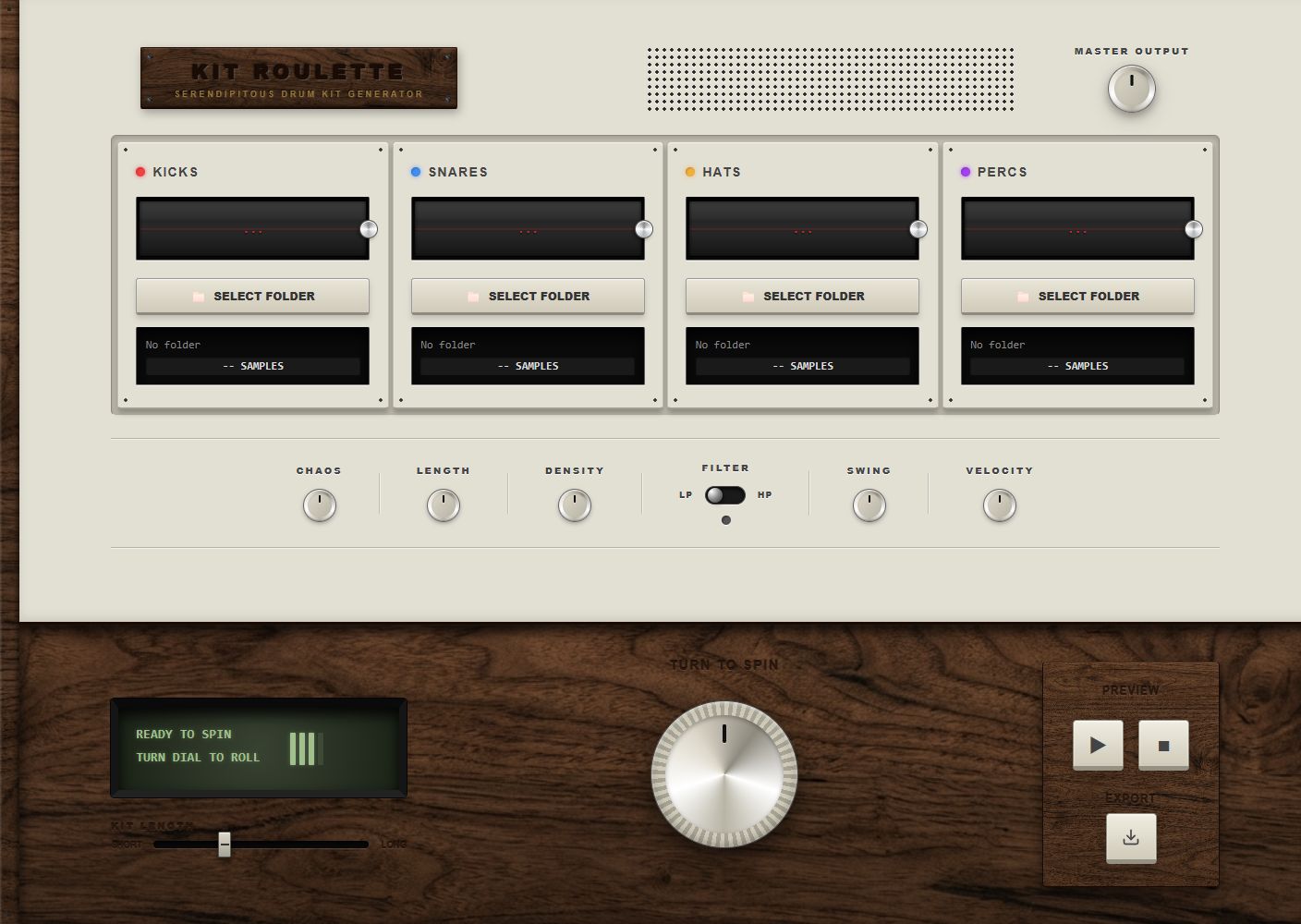
Kit Roulette is a browser-based drum-kit generator. The user selects local sample material, activates the dial-centered generation control, reviews the generated kit, and exports the result as a ZIP. The public interface frames that flow with woodgrain, brushed metal, hardware-like controls, a speaker grille, and a badge panel.
- 01Select local material
- 02Spin the dial
- 03Review the generated kit
- 04Export a portable ZIP
Randomization is treated as a creative ritual rather than a generic utility action. The source collection still belongs to the user; the system changes how choices are narrowed and combined. That balance introduces chance while preserving authorship.

LEAF 04 · KEPT / CUT / CHANGED
Kept / cut / changed
Frame generation as an instrument
The dial and physical-material language make the act of generation feel intentional and tactile. The unusual behavior receives an emotional frame instead of a neutral dashboard treatment.
Export the result as a ZIP
The generated kit is packaged for movement into an existing music workflow. Portability keeps the browser experiment connected to making rather than trapping the result in the interface.
LEAF 05 · WHERE IT IS NOW
Where it is now
Verified current state
Kit Roulette is a public prototype and working creative tool. Local sample selection, randomized kit generation, the current dial-centered interface, and ZIP export are verified. Selection and category rules, duplicate prevention, audition, lock or partial-reroll behavior, dial input details, naming, compatibility, and external use remain undocumented. The earlier crank concept is not shown, and no reason for its replacement is claimed.
What carried forward
The experiment reinforced that emotional character can change a utility action. Designed constraints can create momentum, and software can borrow ritual from physical instruments without becoming a literal hardware simulation.
